Blog
-
Posted: April 27, 2026
 Read more »
What Are Deflector Holes on Solid Tires?
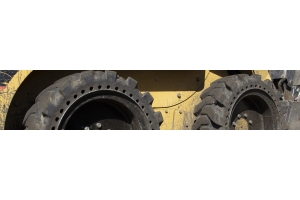
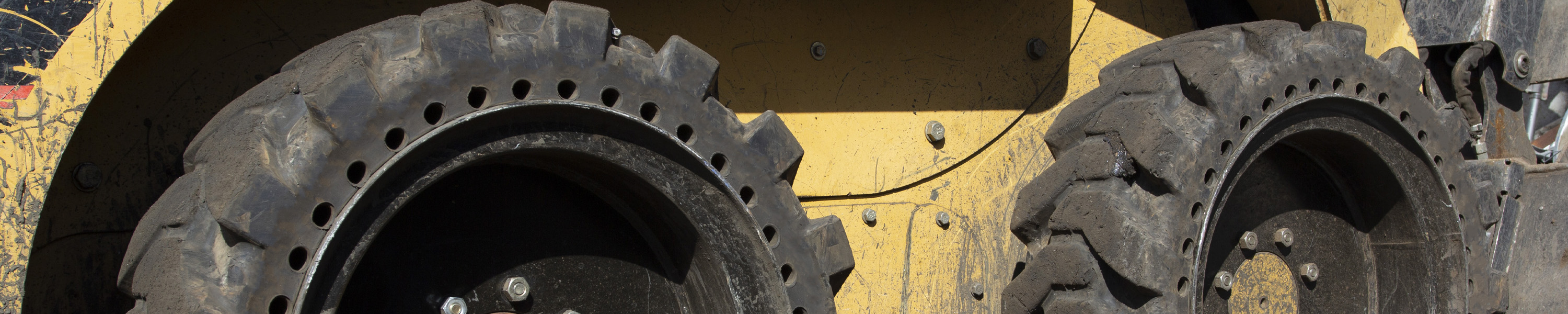
If you’ve noticed holes in the sidewalls of solid tires, those aren’t defects, they’re a critical design feature called deflector holes (or aperture holes).
Why Deflector Holes Matter
Deflector holes play a key role in both manufacturing quality and real-world performance.
Heat Control During Manufacturing
Rubber must be cured at precise temperatures to achieve the right balance of strength and flexibility.
- Too much heat → rubber becomes brittle
- Too little heat → poor bonding between layers
Deflector holes allow heat to reach the center of the tire during curing, ensuring consistent quality throughout the entire structure
Heat Dissipation During Use
Unlike air-filled tires, solid tires cannot expand to release heat.
As heat builds up:
- The rubber can harden
- Performance can degrade over time
Deflector holes help release trapped heat, improving longevity and maintaining performance.
Improved Ride Comfort
Solid tires naturally produce a firmer ride.
-
Posted: April 27, 2026Read more »
Solid Tires vs. Pneumatic Tires: Why Upgrade?
A common question operators ask is whether it makes sense to replace OEM pneumatic tires with solid tires.
The answer depends on your application, but in many cases, switching to solid tires is a major upgrade in performance and reliability.
Longer Tire Life
Solid tires are built for longevity. In many applications, they last 3-4 times longer than pneumatic tires—and sometimes even outlast the machine itself.
This is especially true for equipment like telehandlers that operate in limited travel areas.
Flat-Proof Performance
Unlike pneumatic tires, solid tires cannot go flat.
This makes them ideal for:
- Scrap yards
- Construction sites
- Recycling facilities
- Forestry and demolition environments
Reducing flats means reducing downtime, and that directly impacts productivity and operating costs.
Lower Total Cost of Ownership
While solid tires have a higher upfront cost, they often deliver:
- Fewer replacements
- Less maintenance
- Reduced downtime
Over time,
-
Posted: April 27, 2026
 Read more »
Foam-Filled Tires vs. Solid Tires
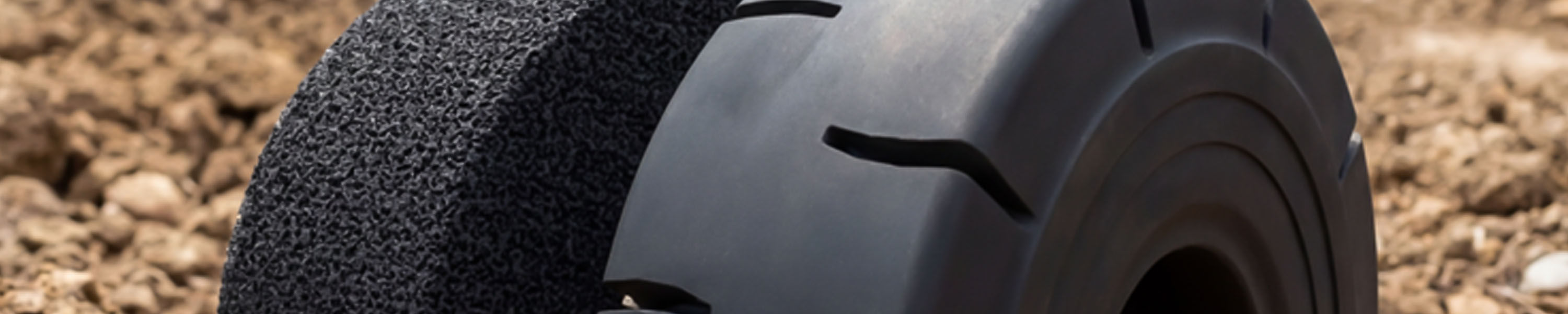
If avoiding downtime from flats is your top priority, you’re likely choosing between foam-filled tires and solid tires. Both eliminate punctures—but they perform very differently.
Foam-Filled Tires
Foam-filled tires start as standard pneumatic tires that are filled with a liquid compound, which hardens inside the casing.
Advantages:
- Softer ride compared to solid tires
- Can reuse existing pneumatic tires
- Lower upfront cost in some cases
Drawbacks:
- Built from multiple components (tire + foam + installation), increasing failure risk
- Sidewalls are more vulnerable to damage
- If the casing fails, the tire becomes unusable
- Can become messy and difficult to service
Solid Tires
Solid tires are engineered as a single, integrated unit. No air, no fill, no weak points.
Advantages:
- Completely flat-proof
- Superior sidewall protection
- Designed for heavy-duty environments
- Lower long-term cost due to reduced downtime
- Higher overall ROI in demanding applications
Drawbacks:
-
Posted: April 27, 2026Read more »
Solid Pneumatic vs. Press-On Tires
Choosing the right industrial tire starts with understanding how your equipment is used. Two common solid tire options, press-on tires and solid pneumatic tires, are built for very different environments.
Press-On Tires
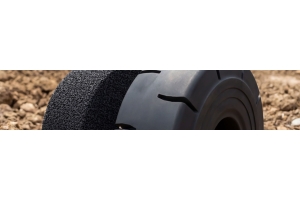
Press-on tires (also called cushion tires) feature a solid rubber construction bonded to a steel band that is pressed directly onto the wheel.
Best for: Indoor applications like warehouses and distribution centers
Advantages:
- Extremely durable construction
- High load-carrying capacity
- Longest overall lifespan among industrial tires
Limitations:
- Very firm ride, which can increase operator fatigue
- Not compatible with all machines
- Converting from pneumatic setups can be costly
Solid Pneumatic Tires (Resilient Tires)
Solid pneumatic tires combine the shape of traditional air-filled tires with the durability of solid rubber construction.
Best for: Mixed indoor/outdoor environments
Advantages:
- More comfortable ride compared to press-on tires
-
Posted: April 27, 2026
 Read more »
What is Ply Rating for Tires?
Ply rating is one of the most important indicators of a tire’s strength and load capacity—and you’ll find it listed directly on the tire sidewall.
While the term “ply” originally referred to the number of material layers inside a tire, modern tires no longer follow that exact structure. Today, ply rating (or load range) is used as a standardized way to indicate how much weight a tire can safely carry at a given pressure.
What Ply Rating Actually Means
In today’s market, a tire labeled as 10-ply, 12-ply, or 14-ply doesn’t literally contain that many layers. Most heavy-duty tires are built with fewer plies using stronger materials like steel or advanced fabric.
Instead, the ply rating reflects the tire’s overall strength compared to older tire construction methods.
As a general rule:
- Higher ply rating = greater load capacity and durability
- Lower ply rating = lighter duty and lower cost
Choosing the Right Ply Rating
Selecting the right ply rating comes down to