Foam-Filled Tires vs. Solid Tires


Posted:
April 27, 2026
Foam-Filled Tires vs. Solid Tires
If avoiding downtime from flats is your top priority, you’re likely choosing between foam-filled tires and solid tires. Both eliminate punctures—but they perform very differently.
Foam-Filled Tires
Foam-filled tires start as standard pneumatic tires that are filled with a liquid compound, which hardens inside the casing.
Advantages:
- Softer ride compared to solid tires
- Can reuse existing pneumatic tires
- Lower upfront cost in some cases
Drawbacks:
- Built from multiple components (tire + foam + installation), increasing failure risk
- Sidewalls are more vulnerable to damage
- If the casing fails, the tire becomes unusable
- Can become messy and difficult to service
Solid Tires
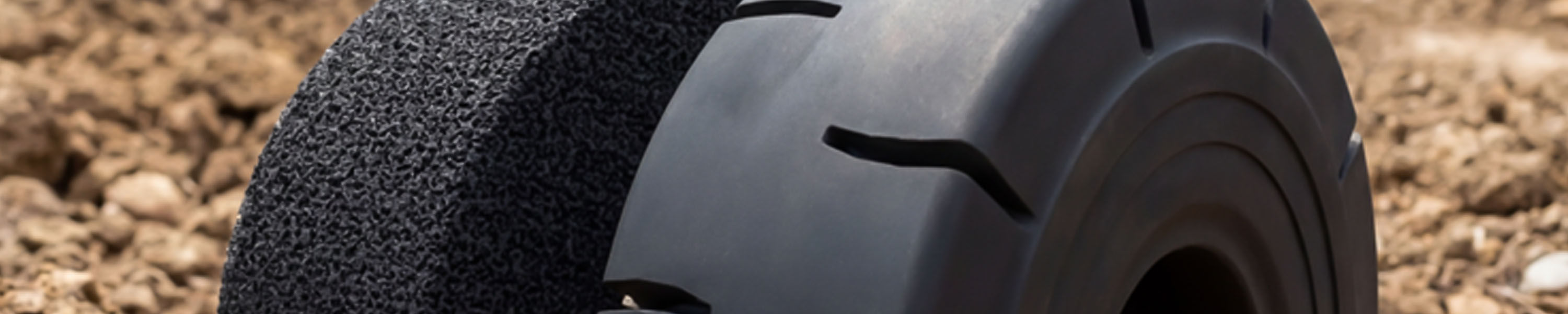
Solid tires are engineered as a single, integrated unit. No air, no fill, no weak points.
Advantages:
- Completely flat-proof
- Superior sidewall protection
- Designed for heavy-duty environments
- Lower long-term cost due to reduced downtime
- Higher overall ROI in demanding applications
Drawbacks:
- Firmer ride
- Higher upfront investment
- Heavier than foam-filled options
Which Is Better?
- Choose foam-filled if ride comfort and lower upfront cost are priorities
- Choose solid tires if durability, uptime, and long-term cost savings matter most
For high-risk environments like scrap yards, demolition, or recycling, solid tires are typically the more reliable solution.
Duratire Direct can help you compare both options based on your machine type and job conditions.
Comment(s)
Recent Posts